

San Diego Rental Market Trends Vacation Owners Must Know in 2026

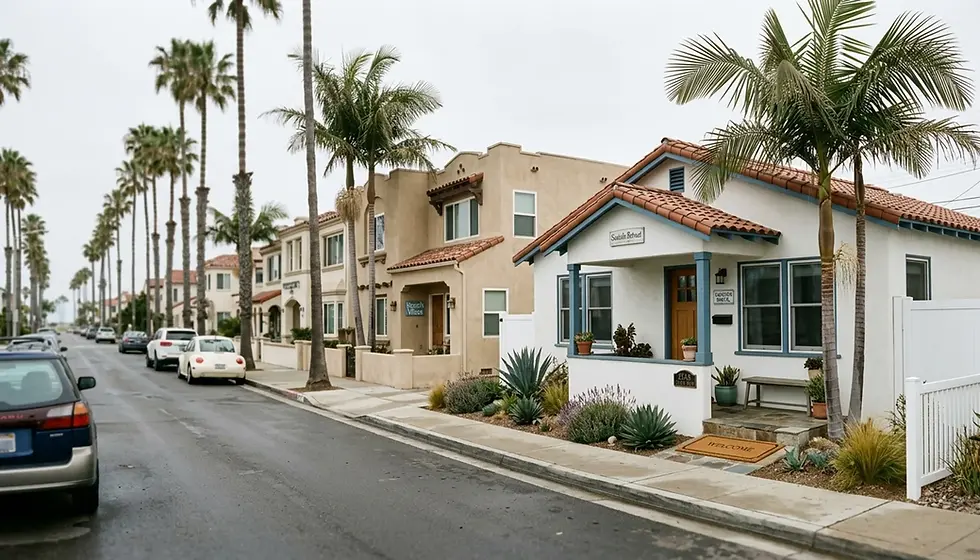

San Diego rental market trends in 2026 tell two very different stories depending on which side of the market you occupy. Long-term multifamily rents are softening, vacancy is at a 15-year high, and downtown landlords are offering up to two months free rent to attract tenants. But short-term rental owners are watching occupancy climb, average daily rates rise, and annual revenue per listing grow year over year. If you own a vacation rental in San Diego County, this distinction matters enormously for how you price, position, and manage your property through the rest of 2026.
STR occupancy in San Diego reached 60%, up 4% year over year, while average daily rates hit $333.70, up 3% (AirDNA).
Long-term rents are declining: San Diego's median one-bedroom rent fell to $2,200 per month in April 2026, down 2.2% annually, dropping the city to No. 12 on Zumper's national ranking from No. 5 in summer 2022.
Supply surge is the main driver: San Diego County absorbed roughly 6,200 new multifamily units in 2026, a 52% jump from the prior year, pushing countywide vacancy to 5.4% as of Q1 2026.
STR revenue per listing averages approximately $39,000 annually, up 3% year over year, with RevPAR at $187.10, up 6% (AirDNA).
The construction pipeline is contracting: units under construction fell 24% year over year in Q1 2026, suggesting supply pressure eases by 2027 and 2028.
Neighborhood performance varies sharply: coastal areas like Pacific Beach, Mission Beach, and La Jolla outperform inland and downtown submarkets for both short-term and long-term rental demand.
Understanding these diverging dynamics is not optional for vacation property owners in 2026. The long-term rental softening creates both competitive pressure and opportunity: guests who might have relocated to San Diego are now more mobile, and the broader market narrative of "falling rents" can actually work in a savvy STR host's favor if you know how to position against it. At The Brite Place, we track both the long-term and short-term sides of this market because they interact in ways most self-managing owners miss entirely.
This guide breaks down the verified numbers from AirDNA, Zumper, CoStar, and the San Diego Tourism Authority, then translates each trend into a specific action for vacation rental owners. Skip the noise from generic rental reports written for apartment hunters. This is the data that actually affects your nightly rate, your occupancy, and your annual revenue.

Are Rental Prices Going Down in San Diego?
San Diego long-term rents are declining in 2026, but the picture is more nuanced than a simple yes or no. According to Zumper's National Rent Report for April 2026, the median one-bedroom rent in San Diego city was $2,200 per month, down 2.2% annually. That drop is significant enough to push San Diego from No. 5 on Zumper's national affordability ranking in summer 2022 all the way to No. 12 today. CoStar Group, which tracks approximately 289,000 rental units of five or more units across San Diego County, reported six consecutive months of month-over-month rent declines through December 2026, the first annual rent decline the market has seen since 2010.
The primary cause is new supply. According to a Redfin apartment permit data press release, San Diego County built 23.6 multifamily units per 10,000 residents from July 2026 to June 2026, the highest per-capita rate of any California metro, surpassing Sacramento at 10.5 and Los Angeles at 10.2. Research from Construction Coverage multifamily housing research shows that 70.8% of San Diego County's total construction in that same period was multifamily, second only to New York nationally. That is an extraordinary concentration of apartment supply in a single market.
But here is the critical distinction for vacation rental owners: this decline is concentrated in multifamily long-term rentals, not short-term rentals. Downtown San Diego carries the heaviest burden, with vacancy exceeding 10% according to CoStar. Smaller coastal properties in Pacific Beach, Mission Beach, and Cardiff-by-the-Sea are absorbing new renters in two to three weeks rather than the two to three days seen during the 2021 peak, according to broker Rob Brown of Fantastic Realty, who owns 17 units across those neighborhoods. That resilience at the coast has a direct parallel in STR performance data.
For short-term vacation rentals specifically, rents are not going down at all. The short-term rental market runs on nightly pricing, not monthly leases, and the 2026 data shows the opposite trend from the multifamily sector. STR occupancy is up, ADR is up, and RevPAR is up. If you are managing a vacation rental in San Diego, the softening long-term market is a competitor trend to monitor, not a direct threat to your revenue model.
What Will the Rent Market Look Like for STR Owners in San Diego Through 2026?
The San Diego short-term rental market in 2026 is outperforming expectations set by the broader multifamily softening. AirDNA data shows that San Diego STR occupancy sits at 60%, up 4% year over year, while average daily rates climbed to $333.70, up 3%. RevPAR, the most complete revenue efficiency metric, reached $187.10, a 6% year-over-year gain. Annual revenue per active STR listing averages approximately $39,000, also up 3%. These figures reflect a market with growing demand absorbing a growing supply base: active listings expanded 8% over the past year, yet performance metrics still improved.
For the rest of 2026, the outlook for STR owners depends heavily on three factors: seasonal demand timing, the regulatory environment, and the ongoing interaction between short-term and long-term rental competition.
Seasonal Demand Patterns Vacation Owners Should Plan Around
San Diego's STR market runs on a predictable seasonal rhythm with several identifiable peaks. Summer, specifically late June through August, delivers the highest occupancy and the widest opportunity for premium nightly pricing, particularly in beachfront neighborhoods. San Diego County welcomed approximately 32.4 million visitors in calendar year 2026, spending an estimated $14.4 billion, according to the San Diego Tourism Authority. That volume creates a competitive window where well-positioned STR listings can command significantly above-average nightly rates.
Beyond summer, San Diego benefits from year-round event-driven demand. Comic-Con, held annually at the San Diego Convention Center, fills hotels and vacation rentals across the downtown and Mission Bay area. The San Diego Zoo, Balboa Park, and the broader cultural calendar attract leisure travelers even in traditionally slower winter months. This event density means pricing should not simply follow a flat seasonal curve. Dynamic rate adjustments tied to specific event calendars routinely outperform static pricing schedules by a meaningful margin. Owners who set and forget their rates every January are leaving money on the table throughout the year.
Where the Long-Term Market Creates STR Opportunity
The multifamily vacancy surge, particularly the downtown vacancy rate above 10%, has a secondary effect on vacation rentals worth understanding. Remote work has shifted renter demand away from downtown proximity toward coastal neighborhoods, according to ManageCasa's 2026 San Diego market analysis. Pacific Beach, La Jolla, and Mission Beach are seeing stronger sustained rental interest than central or inland submarkets. For STR owners, this coastal demand concentration means that a well-maintained, well-marketed beach-area property competes in a segment that has proven more durable than the broader market decline suggests.
Additionally, the international travel recovery to San Diego is running behind schedule. The San Diego Tourism Authority projects that full recovery to pre-pandemic international visitation volumes may not arrive until closer to 2029, due to ongoing global economic uncertainty and visa frictions. That gap in international visitor volume creates opportunity for domestic leisure travelers, the core short-term rental guest demographic, to fill coastal properties at strong rates without the heavy competition from hotels chasing large international tour groups.

Which San Diego Neighborhoods Perform Best for Short-Term Rentals?
San Diego STR neighborhood performance refers to how individual submarkets differ in occupancy, average daily rate, and revenue potential for vacation rental listings. Not all San Diego zip codes operate the same way, and choosing the right target neighborhood, or understanding the competitive position of the one you already own in, is one of the highest-leverage decisions a vacation rental owner makes.
Specifically, coastal neighborhoods consistently outperform inland and downtown submarkets for short-term rental revenue. Pacific Beach and Mission Beach attract the highest concentration of leisure travelers seeking beach access, and both have historically ranked among San Diego's top STR revenue zones. La Jolla commands premium nightly rates due to its cliff-top geography, upscale dining along Prospect Street, and proximity to the Torrey Pines State Natural Reserve. Carlsbad benefits from Legoland proximity and family-oriented demand, with Zumper data showing one-bedroom long-term rents at $2,540 even as the broader market softens, indicating sustained demand fundamentals in that corridor.
Downtown and Inland: A Different Story
Downtown San Diego is a cautionary example for STR owners considering that submarket. With over 18,000 apartments as of mid-2026 per CoStar, and vacancy exceeding 10%, downtown landlords are competing aggressively. The Torrey, one of the newest downtown apartment complexes, was offering up to two months free rent plus a look-and-lease incentive as of May 2026. That level of concession reflects a market where supply has outrun demand, and STR owners in downtown face stiff competition from furnished apartment alternatives that now cost less than a vacation rental nightly rate spread across 30 days.
Encinitas, Del Mar, and Oceanside offer a middle ground: lower price points than La Jolla and Pacific Beach, but strong leisure demand from surfers, cyclists, and the broader coastal lifestyle audience. Oceanside in particular has seen significant investment in its downtown and harbor area, attracting a newer demographic of traveler. For owners in these submarkets, the competitive moat is amenity differentiation: outdoor spaces, pet-friendly setups, and proximity language in listings matter more than they did two years ago.
How San Diego STR Regulations Affect Your 2026 Revenue Strategy
San Diego short-term rental regulations refer to the city and county licensing requirements that govern who can operate a vacation rental, where, and under what conditions. For vacation rental owners in 2026, understanding this regulatory layer is not optional: operating without a valid short-term rental ordinance (STRO) license exposes you to enforcement action and listing removal from platforms like Airbnb and VRBO.
The City of San Diego's STRO framework establishes tiered permits based on owner-occupancy status. Whole-home STR licenses for non-owner-occupied properties are subject to a citywide cap, and permit availability in high-demand areas like Mission Beach is further constrained by additional local limits. Mission Beach has a specific numerical cap on whole-home STR permits that predates the broader STRO ordinance, making it one of the most restricted STR zones in the county.

For owners in unincorporated San Diego County, separate county-level regulations apply, which differ from city rules in meaningful ways. Carlsbad, Encinitas, La Jolla (within city limits), and Oceanside each fall under different jurisdictional authority depending on parcel location. If you are unsure which regulatory framework governs your property, that uncertainty itself is a risk worth resolving before the next guest checks in. Our detailed breakdown of STR regulations in San Diego covers the permit tiers and compliance requirements in depth.
One regulatory trend worth tracking in 2026: Google searches for "rent controlled apartments San Diego" grew 25% year over year, according to ManageCasa's analysis, indicating that both tenants and property owners are paying closer attention to California's AB 1482 rent caps and local renter protection layers. While AB 1482 applies primarily to long-term residential leases and caps annual rent increases at 5% plus local CPI with a 10% ceiling, the broader regulatory trend signals that local governments across San Diego County are more actively engaged with rental market oversight than at any point in the past decade. STR owners are not immune to this trend.
The Good Neighbor Policy guidelines for San Diego are also worth reviewing if you operate in residential neighborhoods. Noise, parking, trash, and occupancy standards are enforced through complaint mechanisms that can jeopardize your STRO license regardless of how good your ratings are.
What Do the Supply and Demand Numbers Mean for Your Rental Income?
San Diego's rental supply and demand balance in 2026 refers to the interaction between new apartment construction, short-term rental listing growth, and the visitor demand that fills both segments. Understanding this balance helps vacation rental owners set realistic revenue expectations and identify where their pricing leverage actually comes from.
On the supply side, the numbers are significant. San Diego County absorbed roughly 6,200 new multifamily units in 2026, a 52% jump from the prior year, according to ManageCasa's 2026 market analysis. Another 4,000 units are projected to deliver in 2026. Historically, San Diego absorbs approximately 3,000 new multifamily units annually under normal market conditions, so the current pipeline is running well above the absorption baseline. This excess supply explains the vacancy rate reaching 5.4% countywide as of Q1 2026, up from a historic low near 2.64% in 2021.
For STR owners, the interaction with this supply surge is indirect but real. Coastal ADUs, accessory dwelling units in areas like Pacific Beach, are renting for $2,500 to $3,500 per month according to ManageCasa, creating a competitive alternative for longer-stay guests who might otherwise have booked a vacation rental for a week or two. A guest spending 30 days in San Diego now has credible furnished apartment alternatives that did not exist two years ago. Pricing your longer-stay offerings competitively against this ADU market matters more in 2026 than it did in 2026.
On the demand side, the Tourism Authority's figure of 32.4 million visitors in 2026 generating $425 million in Transient Occupancy Tax revenues countywide confirms that San Diego's draw remains powerful. Business travel continues to provide a steady demand base, supporting consistent mid-week occupancy that purely leisure-focused STR markets do not enjoy. And with the construction pipeline contracting, units under construction fell 24% year over year as of Q1 2026, the supply pressure on both long-term and short-term rental markets should ease meaningfully by 2027 and 2028. Owners who position well now are building into a tightening market, not a widening one.
Metric | San Diego STR (2026) | San Diego Long-Term Rental (2026) | Year-over-Year Change |
Occupancy / Vacancy | 60% occupied (STR) | 5.4% vacant (multifamily) | STR up 4%; LTR vacancy up from 2.64% (2021) |
Average Rate | $333.70 ADR (nightly) | $2,200/mo median 1BR (Zumper) | STR ADR up 3%; LTR down 2.2% YoY |
Revenue per Unit | ~$39,000/year per listing | ~$26,400/year (median 1BR x 12) | STR up 3%; LTR declining |
RevPAR / Efficiency | $187.10 RevPAR | N/A (different metric structure) | STR RevPAR up 6% YoY |
Active Listing Growth | 15,524 total STR listings (+3% YoY); active listings up 8% | ~289,000 units tracked by CoStar | Both segments adding supply |
Downtown Submarket | Competitive pressure from LTR concessions | 10%+ vacancy; up to 2 months free rent offered | Most distressed submarket countywide |
How Should Vacation Owners Respond to These Market Conditions?
Vacation rental strategy in a softening long-term rental market requires specific adaptations that go beyond simply watching your Airbnb dashboard. The San Diego rental market trends of 2026 create both risks and advantages for STR owners who understand the dynamics. Here is how to act on the data rather than react to it.
Prioritize Dynamic Pricing Over Static Rate Cards
Static pricing, setting a rate in January and adjusting it quarterly at best, is a liability in the current environment. With active STR listings up 8% year over year, competition for bookings has increased. Dynamic pricing tools that adjust nightly rates based on local event calendars, competitor availability, and forward-looking demand signals consistently outperform manual pricing. The difference between an owner using real-time pricing tools and one using a static rate card often amounts to thousands of dollars over a single summer season in Pacific Beach or La Jolla. The revenue management strategies covered in the San Diego revenue management resources section offer deeper guidance on specific approaches.
Upgrade Amenities to Compete With New Inventory
New apartment supply is entering the market with modern finishes, smart home technology, and amenity packages that older vacation rentals cannot match on square footage alone. Your competitive advantage as a short-term rental is flexibility, personalization, and experience. Properties with outdoor entertaining spaces, pet-friendly setups, strong Wi-Fi infrastructure for remote workers, and distinctive design elements consistently outperform generic interiors in both occupancy and review scores. If your property photos look like they were taken in 2019, that is the first thing to fix before any other optimization.
Diversify Across Multiple Booking Platforms
Relying on a single platform for all bookings is a concentration risk. Airbnb and VRBO reach different guest segments, and direct booking channels allow you to avoid platform fees on repeat guests. The channel management challenge, keeping calendars synchronized and rates consistent across platforms without double-booking, is operationally demanding but financially meaningful. Owners who crack this multi-platform approach typically see higher overall occupancy than single-platform operators, particularly during shoulder seasons when one platform's algorithm may deprioritize your listing.
Review Your Regulatory Status Before Your Next Renewal
The STR regulatory environment in San Diego is not static. Permit caps, neighborhood-specific restrictions, and Good Neighbor Policy enforcement have all become more active since 2026. Confirm that your STRO license is current, that your listing complies with occupancy limits, and that your property is following San Diego's noise and parking standards. A single enforcement complaint can jeopardize your entire permit, not just result in a warning. If you have questions about where your property stands on compliance, a STR property evaluation can identify gaps before they become violations.
At The Brite Place, our revenue management and compliance work for San Diego County properties reflects exactly these priorities: dynamic pricing tied to event calendars, listing optimization across platforms, and regulatory compliance tracked as an ongoing operational function rather than an annual checkbox. The owners who see consistent year-over-year revenue growth are the ones treating management as a system, not a series of one-off decisions.
For a broader view of how co-hosting and full management interact with these market conditions, the co-hosting resources for San Diego section covers the structural options available to owners at different involvement levels. And if you want the complete framework for navigating the 2026 San Diego short-term rental landscape, the pillar guide on co-hosting in San Diego covers owner responsibilities, platform selection, and management structure in depth.
Frequently Asked Questions About San Diego Rental Market Trends
Are San Diego short-term rental rates declining like long-term rents?
No. San Diego short-term rental rates are moving in the opposite direction from long-term multifamily rents in 2026. According to AirDNA, the STR average daily rate in San Diego reached $333.70, up 3% year over year, while STR RevPAR grew 6% to $187.10. Long-term median rents fell 2.2% annually to $2,200 per month for a one-bedroom, per Zumper April 2026 data. The two markets are operating independently, driven by different demand pools and supply dynamics.
What is the average occupancy rate for Airbnb listings in San Diego?
San Diego short-term rental occupancy averaged 60% in 2026, up 4% year over year, according to AirDNA. This figure covers all active STR listings across San Diego County, including coastal neighborhoods like Pacific Beach, La Jolla, Mission Beach, and Carlsbad. Individual property occupancy varies significantly based on listing quality, pricing strategy, location, and platform visibility. Coastal properties with professional photography and dynamic pricing consistently outperform the countywide average.
Is the 30 percent rent rule still realistic for San Diego vacation rental owners?
The traditional 30% rent rule, the guideline that housing costs should not exceed 30% of gross income, is a residential tenant standard and does not apply directly to vacation rental revenue calculations. For STR owners evaluating whether a San Diego property makes financial sense, the relevant benchmarks are annual revenue per listing (approximately $39,000 countywide per AirDNA), mortgage-to-revenue coverage ratios, and net operating income after management fees, cleaning, and maintenance costs. A property evaluation from a qualified STR manager gives you figures specific to your property and location.
Which San Diego neighborhoods have the strongest short-term rental demand in 2026?
Coastal submarkets consistently outperform inland and downtown San Diego for STR demand. Pacific Beach, Mission Beach, La Jolla, and Encinitas attract the highest concentration of leisure travelers seeking beach access and outdoor activities. Carlsbad performs strongly for family-oriented travel given its proximity to Legoland. Downtown San Diego faces the most competitive pressure in 2026 due to multifamily vacancy exceeding 10% and aggressive rent concessions from long-term landlords. If you own in a coastal neighborhood, your demand fundamentals are substantially stronger than the broader market softening narrative suggests.
How many short-term rental listings are active in San Diego County?
AirDNA data shows 15,524 total short-term rental listings in San Diego County as of 2026, up 3% year over year, with active listings specifically growing 8% over the past year. This supply growth has not suppressed performance metrics: occupancy, ADR, and RevPAR all improved year over year, suggesting that demand is absorbing new supply. However, as listing counts continue to grow, differentiation through listing quality, pricing strategy, and amenity positioning becomes increasingly important for maintaining above-average occupancy.
What does San Diego's new apartment construction surge mean for vacation rental owners?
San Diego County absorbed roughly 6,200 new multifamily units in 2026, a 52% jump from the prior year, according to ManageCasa's 2026 market analysis. This surge is driving long-term rental softening, with countywide vacancy reaching 5.4% as of Q1 2026. For STR owners, the most direct implication is increased competition for longer-stay guests, who now have more furnished apartment alternatives at competitive monthly rates. The pipeline is contracting, with units under construction down 24% year over year, meaning supply pressure should ease by 2027. Short-term vacation demand remains insulated from the multifamily cycle.
How do San Diego STR regulations affect vacation rental income in 2026?
San Diego's STRO licensing framework caps whole-home short-term rental permits, particularly for non-owner-occupied properties, and imposes additional restrictions in high-demand areas like Mission Beach. Operating without a current STRO permit exposes owners to enforcement action and potential removal from Airbnb and VRBO. Annual TOT revenues in San Diego County reached approximately $425 million in fiscal year 2026, per the San Diego Tourism Authority, reflecting both the scale of STR activity and the financial stake regulators have in maintaining oversight. Compliance is not optional and should be treated as an ongoing operational function.
What San Diego Vacation Rental Owners Should Do Now
San Diego rental market trends in 2026 present a clear opportunity for vacation owners who act on the data rather than the headlines. Long-term rents are softening, but short-term vacation rental performance is strengthening, with occupancy up 4%, ADR up 3%, and RevPAR up 6% year over year per AirDNA. The construction pipeline is contracting, meaning the supply pressure that has weighed on long-term rents will ease before it meaningfully affects STR demand. Coastal neighborhoods, specifically Pacific Beach, La Jolla, Encinitas, and Carlsbad, remain the strongest performing submarkets for vacation rentals in the county.
The owners who will generate the most revenue through the rest of 2026 and into 2027 are the ones who treat their short-term rental as a managed business, not a passive asset. That means dynamic pricing tied to event calendars, multi-platform channel management, current STRO licensing, and listing quality that competes with the new inventory entering the market. None of those functions work well on autopilot, and all of them compound over time when executed consistently.
If you are managing your San Diego vacation rental yourself and feeling the weight of pricing decisions, guest communication, and compliance tracking, the most practical next step is a professional assessment of where you stand and what you are leaving on the table. San Diego's STR market is growing, and the owners who capture that growth are the ones with systems in place.

Managing a San Diego vacation rental through a shifting market takes more than good timing. It takes dynamic pricing, platform expertise, regulatory compliance, and consistent guest service working together as a system. The Brite Place provides full-service STR management across San Diego County, including La Jolla, Pacific Beach, Carlsbad, Encinitas, and Del Mar, handling everything from nightly rate optimization to STRO compliance so you can focus on the income, not the operations. Learn how The Brite Place can manage your San Diego property and see what professional management does for your annual revenue.


Comments