

San Diego Short-Term Rentals: Everything You Need To Know

Updated: May 6

San Diego's short-term rental market operates under the Short-Term Residential Occupancy (STRO) licensing system, which requires all operators to obtain specific permits based on property type and location. As of March 2026, the city has issued 8,293 STRO licenses across four tiers, with Tier 4 Mission Beach licenses currently unavailable while other tiers remain open for new applications.
TL;DR: San Diego Short-Term Rental Essentials
STRO license required: All short-term rentals need city permits, with fees ranging from $226-$1,170 depending on tier
Four license tiers: Part-time (20 days max), home sharing (host present), whole home (90-day limit), and Mission Beach (currently closed)
Current availability: Tier 3 has 915 licenses remaining, Tiers 1-2 unlimited, Tier 4 at capacity with 0 available
Minimum requirements: 2-night minimum stays, 90-day annual utilization for Tiers 3-4, host compliance training
Revenue potential: Properties range from $121-$945 per night across neighborhoods like North Park, Mission Beach, and Downtown
Key compliance: Transient Occupancy Tax registration, business tax certificate, and neighbor notification requirements
The STRO system launched to balance tourism revenue with neighborhood preservation, creating structured pathways for property owners to enter the short-term rental market legally. Understanding these STR regulations in San Diego CA forms the foundation for successful STR operations in America's Finest City.
San Diego's approach differs significantly from other California markets through its tiered licensing structure and geographic restrictions. The system provides clear guidelines while maintaining housing stock for long-term residents, particularly in high-demand coastal areas.

What Are San Diego's STRO License Requirements?
San Diego requires all short-term rental operators to obtain an STRO license before accepting guests. The licensing system divides properties into four distinct tiers based on host presence requirements and geographic location.
Tier 1 Part-Time licenses allow rentals for a maximum of 20 days per calendar year without requiring the host to be present during guest stays. These licenses cost $226 total ($33 application plus $193 license fee) and have unlimited availability citywide.
Tier 2 Home Sharing licenses permit rentals for more than 20 days annually but require the host to reside onsite during all guest stays. The total cost reaches $317 ($33 application plus $284 license fee) with unlimited availability across San Diego.
Tier 3 Whole Home licenses allow host absence for up to 90 days per calendar year outside the Mission Beach area. These licenses cost $1,170 total ($41 application plus $1,129 license fee) and are limited to 1% of San Diego's total housing units. As of March 2026, 915 Tier 3 licenses remain available.
Tier 4 Mission Beach licenses operate under the same rules as Tier 3 but are restricted to the Mission Beach Community Planning Area. Limited to 30% of housing units in the area, all 1,097 available licenses have been issued with zero remaining as of March 2026.
All STRO licenses expire every two years from the issuance date, with renewal notices sent 60 days before expiration. The city provides specific contact information for different aspects of compliance: STRO Administration at 619-615-6120, Building and Land Use Enforcement at 619-533-6489 for violations, and Transient Occupancy Tax Administration at 619-615-1530. For a deeper look at all current rules, the San Diego STR Regulations 2026 Complete Guide For Property Owners covers every requirement in detail.
How Do You Apply for an STRO License in San Diego?
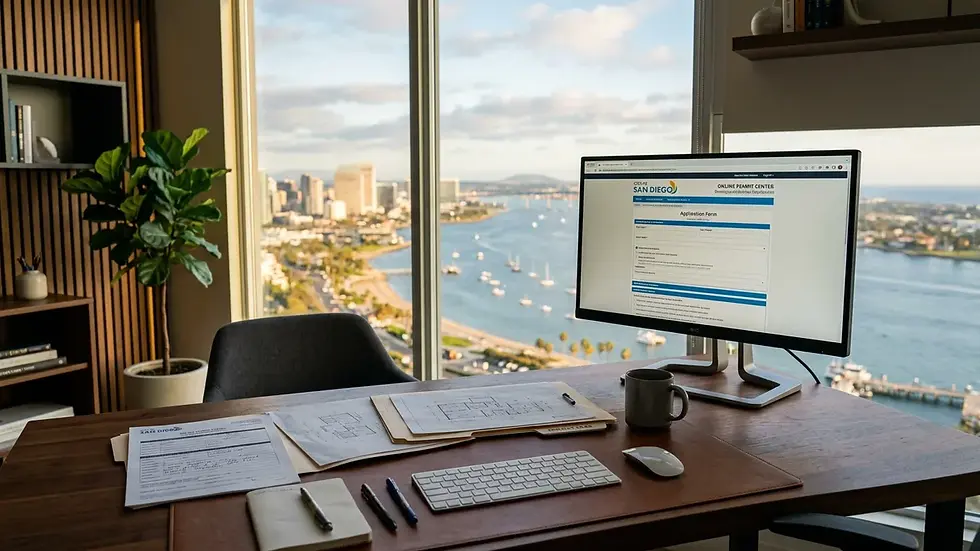
The STRO license application process requires several prerequisite steps before submitting through the city's official portal. Property owners must first verify their location falls within San Diego city limits using the City of San Diego Council District Map.
Step 1: Obtain Transient Occupancy Tax Certificate Before applying for an STRO license, property owners must register through the Transient Occupancy Registration System. This prerequisite ensures tax compliance and establishes the legal framework for collecting city occupancy taxes from guests.
Step 2: Complete Human Trafficking Awareness Training All STRO license applicants must complete human trafficking awareness training using resources from the San Diego County District Attorney's Office. This requirement helps hosts recognize warning signs and understand reporting obligations.
Step 3: Submit STRO License Application Applications are submitted through the city's official Accela system. The city provides an instructional video walking through the application process step-by-step.
Step 4: Property Inspection and Approval Once submitted, applications undergo review including potential property inspections to verify safety compliance and neighborhood compatibility. Processing times vary based on application volume and inspection scheduling.
The complete STRO ordinance provides detailed legal requirements, while the Active STRO Licenses database allows property owners to research existing licenses in their area.
What Are the Financial Requirements and Costs?
San Diego's STRO licensing involves multiple financial components beyond the initial application and license fees. Understanding the complete cost structure helps property owners budget accurately for legal compliance and ongoing operations.
Initial Licensing Costs (effective March 2026):
License Tier | Application Fee | License Fee | Total Cost | Duration |
Tier 1 Part-Time | $33 | $193 | $226 | 2 years |
Tier 2 Home Sharing | $33 | $284 | $317 | 2 years |
Tier 3 Whole Home | $41 | $1,129 | $1,170 | 2 years |
Tier 4 Mission Beach | $41 | $1,129 | $1,170 | 2 years |
Ongoing Tax Obligations Transient Occupancy Tax (TOT) applies to all short-term rentals at rates determined by the total rental amount and length of stay. Property owners must register separately through the TOT system and collect these taxes from guests. To understand what fees you may face beyond taxes, the guide on 5 Hidden Costs Short Term Rental Management San Diego, CA Companies Won't Tell You is essential reading.
Business Tax Requirements All STRO operators need a business tax certificate, managed through Business Tax Compliance at 619-615-1539. This separate requirement adds annual costs depending on rental revenue levels.
Utilization Requirements Tiers 3 and 4 licenses require minimum 90-day utilization each calendar year to maintain validity. Properties failing to meet this threshold risk license revocation, making consistent bookings essential for compliance.
The two-year license term means these costs recur regularly. Property owners should factor renewal fees into long-term financial planning, especially given San Diego's competitive rental market and seasonal demand fluctuations. For a full breakdown of what owners typically pay, see this guide on What Do Property Management Companies Charge: Full Fee Breakdown. Owners in nearby markets may also find it useful to review Property Management In Carlsbad Ca Hidden Costs Red Flags 2026 for additional regional cost context. Owners seeking co-hosting options nearby can also explore co-hosting services in Carlsbad CA for flexible management alternatives.
Which Neighborhoods Offer the Best STR Opportunities?
San Diego's diverse neighborhoods provide varying opportunities for short-term rental success, with location directly impacting both licensing availability and revenue potential. Current market data reveals significant variation in nightly rates and guest demand across the county. For a broader view of San Diego property management across neighborhoods, additional resources can help owners compare options. Owners researching San Diego CA property management resources will find neighborhood-specific guides especially useful.
Mission Beach commands premium rates but faces the strictest licensing constraints. Properties here reach $648 per night for 3-bedroom townhomes, with one listing achieving perfect 10/10 ratings from 52 reviews. However, Tier 4 licenses remain at capacity with zero availability, making entry impossible for new operators.
North Park offers strong performance across multiple property types. A 2-bedroom penthouse averages $350 per night with 9.8/10 ratings from 157 reviews, while larger 4-bedroom apartments command $901 per night accommodating up to 12 guests. The neighborhood attracts both leisure and business travelers with its central location.
Downtown San Diego provides consistent demand from business travelers and convention attendees. Properties range from $186 per night for 1-bedroom apartments near major attractions to $671 per night for larger condos accommodating groups up to 10 people.
Point Loma benefits from proximity to SeaWorld and maritime attractions. Guest suites achieve $230 per night with exceptional 9.6/10 ratings from 213 reviews, demonstrating strong guest satisfaction in this waterfront area. Owners in nearby coastal communities may also want to review Property Management Ocean Beach CA: Why Coastal Properties Need Specialized Management for relevant insights.
Bankers Hill caters to luxury travelers seeking upscale accommodations. A 4-bedroom house commands $448 per night while accommodating 12 guests, earning 9.6/10 ratings from 178 reviews through premium amenities and location advantages.
Each neighborhood operates under the same STRO licensing requirements, but Tier 3 availability varies based on existing license density. Property owners should research the TOT establishments database to understand local competition before selecting investment properties.

What Common Mistakes Cost New STR Owners Money?
New short-term rental operators in San Diego frequently encounter costly compliance and operational mistakes that impact both profitability and legal standing. Understanding these pitfalls helps property owners avoid unnecessary expenses and violations.
Skipping Prerequisites Many owners attempt to operate without proper STRO licenses, facing potential fines through the city's violation reporting system. Building and Land Use Enforcement actively investigates unlicensed operations, resulting in cease and desist orders and monetary penalties. Understanding California Squatter Law: What Every Property Owner Must Know is also important for owners navigating occupancy and tenant rights issues.
Underestimating Total Compliance Costs Beyond STRO license fees, owners must budget for TOT registration, business tax certificates, and potential inspection requirements. These combined costs can exceed $1,500 annually for Tier 3 operations, not including renewal fees every two years. The detailed breakdown in San Diego Property Management Hidden Costs And Red Flags Nobody Warns You About walks through every expense category owners should anticipate.
Ignoring Utilization Requirements Tiers 3 and 4 licenses mandate 90-day minimum utilization annually. Properties falling short risk license revocation, forcing owners to restart the entire application process. Seasonal properties in San Diego must maintain consistent booking levels year-round.
Poor Pricing Strategy New operators often set static rates without considering San Diego's complex seasonal patterns, convention schedules, and local events. Properties in North Park and Downtown experience significant demand fluctuations requiring dynamic pricing approaches to maximize income. Owners can learn how Vacation Rental Dynamic Pricing: Why Smart Owners Never Set Rates Manually can make a measurable difference in annual revenue.
Inadequate Guest Communication Platform algorithms favor hosts with quick response times and high guest satisfaction scores. Many new operators underestimate the 24/7 communication demands, leading to reduced search visibility and booking rates. Effective channel management across multiple booking platforms is equally important for maintaining visibility and occupancy.
Overlooking Neighbor Relations STRO regulations include neighbor notification requirements and noise ordinances. Properties generating complaints face increased scrutiny and potential license suspension. Proactive community engagement prevents many enforcement issues, and understanding the San Diego Good Neighbor Policy 2026 Complete Compliance Guide can make all the difference. Owners can also review the Good Neighbor Policy Guidelines San Diego for a quick reference on key requirements.
Professional Property Management San Diego California Complete 2026 Owner Guide addresses these common mistakes through systematic compliance monitoring, market-based pricing strategies, and established operational procedures. For property owners seeking expert guidance, working with experienced providers can help navigate complex regulatory environments while maximizing rental income.
How Do Seasonal Patterns Affect San Diego STR Revenue?
San Diego's short-term rental market experiences distinct seasonal patterns driven by weather, tourism cycles, and major events that significantly impact occupancy rates and nightly pricing across different neighborhoods.
Peak Season Performance (June-September) Summer months generate the highest revenue for most San Diego properties, particularly those near beaches and family attractions. Mission Beach properties that average $648 per night annually can command 20-30% premiums during peak summer weekends when families visit SeaWorld, Mission Beach, and beach destinations.
Convention and Business Travel (October-May) Downtown properties benefit from consistent business travel and convention activity throughout the shoulder season. The San Diego Convention Center drives steady demand for properties within walking distance, helping maintain occupancy rates when leisure travel declines.
Holiday Demand Spikes Thanksgiving, New Year's Eve, and spring break periods create temporary demand surges across all neighborhoods. Properties near Balboa Park, the San Diego Zoo Safari Park, and Waterfront Park experience increased bookings from multi-generational family groups during these periods.
Weather-Independent Attractions Indoor venues like the Maritime Museum of San Diego, Gaslamp Quarter restaurants, and Petco Park events provide year-round booking opportunities. Properties positioned near these attractions maintain stronger off-season performance compared to beach-dependent locations.
Optimal Pricing Strategies Successful operators adjust rates based on multiple factors including Comic-Con dates, major sporting events, and military graduation schedules. Properties near downtown command premiums during convention periods while beach locations maximize revenue during summer festivals and holiday weekends.
Dynamic pricing becomes essential for maximizing revenue across these seasonal fluctuations. Understanding revenue management in San Diego CA helps optimize rates daily, ensuring properties capture peak demand while maintaining competitive pricing during slower periods. Owners who want to see real results from dynamic pricing strategies can review Co-Hosting vs Self Management: Real ROI Data from San Diego STRs for data-driven insights.
What Property Management Options Work Best?
San Diego short-term rental owners can choose from several management approaches, each offering different levels of involvement, cost structures, and revenue potential based on property type and owner preferences.
Self-Management Direct owner management provides maximum control and cost savings but requires significant time investment. Successful self-managers typically live within 30 minutes of their properties and enjoy guest interaction, cleaning coordination, and marketing activities. This approach works well for single-property owners with flexible schedules.
Co-Hosting Services Co-hosting arrangements allow owners to maintain control while outsourcing specific tasks like guest communication, pricing optimization, or cleaning coordination. Professional co-hosting in San Diego CA services typically cost 10-20% of rental revenue and provide professional expertise without full management fees. To understand how co-hosting compares to traditional management, the guide on Property Manager vs Cohost: What Every Owner Needs to Know in 2026 offers a clear side-by-side comparison. Owners can also explore Airbnb cohosting STR management services to find flexible options that fit their needs. Owners in San Diego County can also browse co-hosting resources in San Diego County CA for local provider options.
Full-Service Management Comprehensive management handles all operational aspects from listing optimization to guest checkout. Professional management companies focus on design-forward homes in desirable neighborhoods, providing end-to-end management for hands-off owners seeking maximum returns. Owners evaluating the value of this approach can consult Property Management Worth It The 2026 Reality Check Every Owner Needs before committing. Understanding What Does A Property Management Company Do Complete 2026 Guide can also clarify what services owners should expect from a full-service provider.
Boutique Management Companies Specialized firms offer curated property collections with premium positioning and professional photography. These services typically command higher management fees but can achieve superior nightly rates through enhanced marketing and guest experience focus. Owners interested in how vacation rental marketing in San Diego drives bookings will find boutique firms especially well-suited to premium property promotion.
Technology-Enhanced Management Platforms combining software tools with selective human support provide middle-ground solutions. These services handle pricing automation, calendar management, and basic guest communication while allowing owners to maintain direct relationships with their properties.
The optimal management approach depends on property location, owner availability, and revenue goals. Downtown and Mission Beach properties often benefit from professional management due to high guest expectations and complex logistics, while properties in residential neighborhoods may succeed with owner management or co-hosting arrangements. You can explore available short-term rental management services to find the right fit for your property. Owners interested in how Pacific Beach properties are managed may also find Property Management Pacific Beach: A 2026 Owner's Practical Guide helpful for comparison. Owners looking for additional San Diego County co-hosting insights can also visit co-hosting resources for San Diego County CA.
How Do You Ensure Long-Term Compliance and Success?
Maintaining STRO compliance and achieving sustained profitability requires ongoing attention to regulatory changes, operational excellence, and market positioning within San Diego's competitive landscape.
Regulatory Monitoring STRO regulations evolve regularly, with the city updating license availability and enforcement priorities based on housing market conditions. Property owners should subscribe to city updates and monitor the active licenses database for changes affecting their tier availability. Staying informed about STR regulations in San Diego CA through dedicated resources helps owners anticipate upcoming changes before they take effect.
Performance Tracking Successful operators monitor key metrics including occupancy rates, average daily rates, guest satisfaction scores, and revenue per available night. Properties achieving consistent 90%+ satisfaction ratings typically command premium pricing and maintain strong booking velocity.
Market Adaptation San Diego's tourism patterns shift based on economic conditions, travel trends, and competitive supply. Properties that adapted quickly to pandemic-era health protocols and remote work demand maintained better performance than those following static operational models.
Neighborhood Integration Building positive relationships with neighbors and local businesses creates long-term operational stability. Properties with community support face fewer complaints and violations, reducing regulatory risk and ensuring sustainable operations. Owners can also review What Nobody Tells You About Good Neighbor Policy San Diego for practical tips on staying in good standing with the community.
Professional Development Staying current with industry best practices through professional services helps owners optimize their investments. For owners looking to maximize their efforts, understanding what is an Airbnb cohost can identify improvement opportunities and ensure competitive positioning. Owners can also explore property management resources in San Diego County for additional guidance from local specialists.
Financial Planning Budgeting for license renewals, tax obligations, maintenance requirements, and market downturns ensures operational continuity. Properties with adequate reserve funds can weather temporary demand fluctuations and invest in improvements that drive long-term value. Owners who want to understand typical property manager cost structures will find this breakdown helpful for accurate financial forecasting.
Long-term success in San Diego's STR market requires treating the operation as a professional business rather than passive investment. Property owners who invest in systems, relationships, and ongoing education typically achieve superior returns while maintaining regulatory compliance. Owners ready to take the next step can Book Your Free Consultation to discuss their specific property goals with an experienced advisor.
Frequently Asked Questions
Are short-term rentals allowed in San Diego?
Yes, short-term rentals are legal in San Diego with proper STRO licensing. The city has issued 8,293 licenses across four tiers as of March 2026, with Tier 1, 2, and 3 applications currently open while Tier 4 Mission Beach licenses remain at capacity with zero availability.
What is the 80/20 rule for Airbnb?
While not specific to San Diego regulations, the 80/20 rule typically refers to revenue optimization where 80% of bookings come from 20% of peak demand periods. San Diego operators should focus on maximizing revenue during summer months, major conventions, and holiday periods when demand peaks.
What is the best short-term rental site?
San Diego properties perform well across multiple platforms including Airbnb, VRBO, and specialized sites like CozyCozy. Many successful operators use channel management to list on multiple platforms simultaneously, maximizing exposure while maintaining accurate availability across booking sites.
What is the 7 day rule for short-term rentals?
San Diego STRO regulations do not include a specific 7-day rule, but all tiers require minimum 2-night stays. Tiers 3 and 4 must maintain 90-day annual utilization to retain licenses, while Tier 1 limits total rental days to 20 per calendar year regardless of booking length.
How long does STRO license approval take?
STRO license processing times vary based on application volume and inspection requirements. Most applications are processed within 30-60 days after submission, though complex cases or peak application periods may extend timelines. Completing all prerequisites before applying helps streamline approval.
Can you operate multiple STRO properties?
Property owners can obtain multiple STRO licenses for different properties, subject to tier availability and individual property compliance. Each property requires separate licensing, fees, and compliance monitoring, making portfolio management more complex than single-property operations. Owners managing properties across regions may also find the san diego property management san diego ca guide helpful for structuring multi-property operations.
What happens if you operate without an STRO license?
Unlicensed short-term rental operations face enforcement action through Building and Land Use Enforcement, including cease and desist orders, monetary penalties, and potential legal action. The city actively investigates violations reported through their official complaint system.
Conclusion
San Diego's STRO licensing system provides a clear framework for legal short-term rental operations, with 8,293 active licenses demonstrating the market's substantial size and opportunity. Success requires understanding the four-tier structure, maintaining compliance with utilization requirements, and adapting to seasonal demand patterns that drive revenue throughout the year.
The current availability of 915 Tier 3 licenses offers opportunities for new operators, while the closure of Tier 4 Mission Beach licenses highlights the importance of timely market entry. Properties achieving strong performance typically combine prime locations with professional management and dynamic pricing strategies tailored to San Diego's unique tourism cycles. Owners considering their options can use a STR property evaluation to assess their property's potential before moving forward. Owners in neighboring markets can also explore the Best Airbnb Management Company San Diego Ca Complete Guide 2026 for a comparison of top local providers. Property owners in nearby Encinitas may also benefit from the Property Management In Encinitas Ca Complete Guide For 2026 for additional regional context. Owners interested in exploring comparable vacation rental markets can also review Big Bear Cabin Vacation Rental: What Nobody Tells You Before You Book for insights on how neighboring mountain markets operate.
As San Diego's tourism industry continues evolving in 2026, successful STR operators will focus on compliance excellence, guest satisfaction, and community integration to build sustainable, profitable businesses within the city's regulatory framework.

Looking to optimize your San Diego short-term rental without the daily operational stress? Lake Havasu: Big Pool & BBQ Fun! demonstrates how professional management transforms properties into revenue-generating assets. The private pool and covered patio showcase the amenities today's travelers expect. Check availability here.


Comments